Geostatistical Prediction and Economic Evaluation Using Intelligent Models
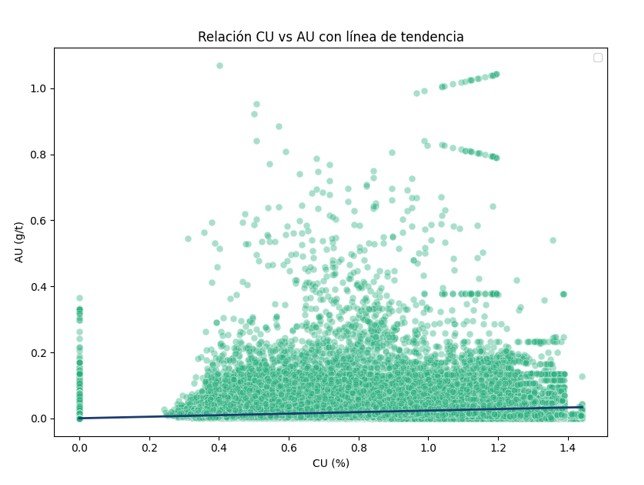
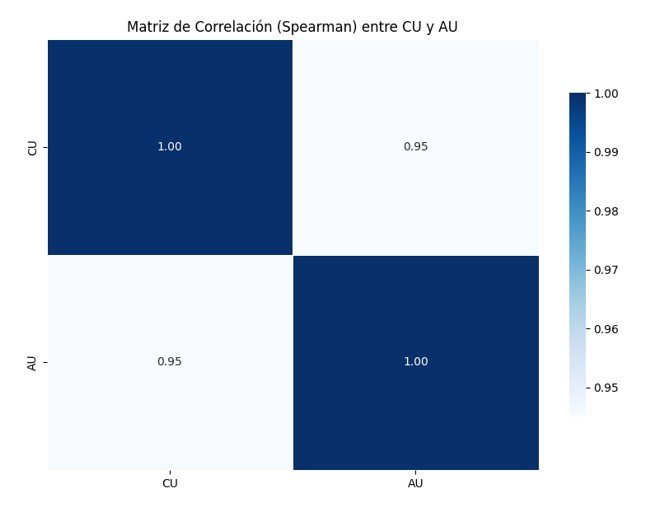
This analysis summarizes the application of machine learning techniques to a block model to predict and classify copper (%Cu) and gold (g/t Au) grades, based on ore type (oxides and sulfides) and resource category (measured, indicated, and inferred). Using tonnage-weighted geostatistical data, real economic values per ton are calculated and high-profitability zones are identified. The integration of artificial intelligence enables the projection of dynamic scenarios based on prices and costs, improving decision-making in mine planning, pit optimization, and phase design. This tool is key to maximizing the economic value of the deposit from its geological base.
Segmentation by Mineralization Type
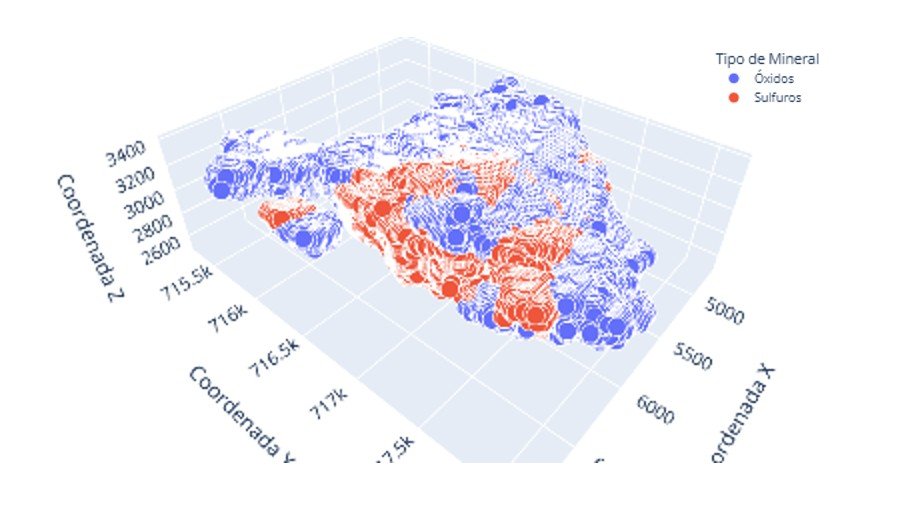
Spatial segmentation of blocks by mineralization type — oxides and sulfides — clearly identifies mineable zones according to the appropriate metallurgical process: leaching for oxides and flotation for sulfides. This economic classification, based on net value per ton, provides a technical criterion for prioritizing extraction according to profitability and plant capacity. In this way, ore processing is integrated with the geological and economic design of the deposit, optimizing the overall mining strategy.
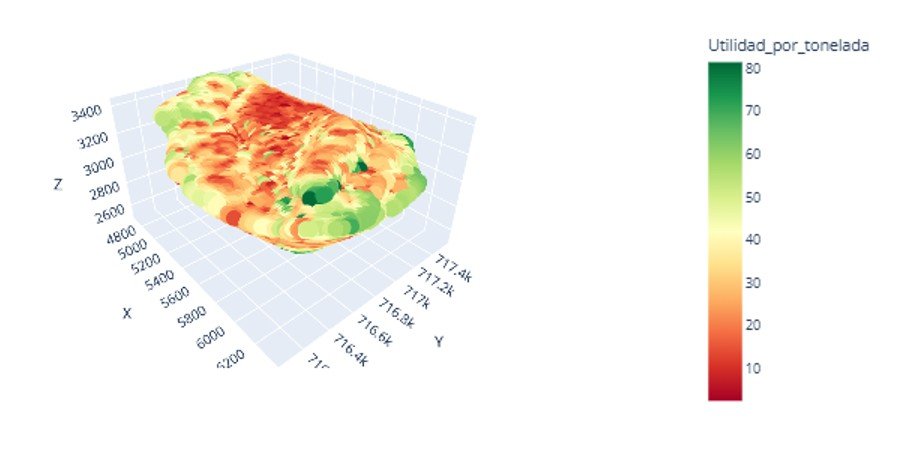
3D Predictive Modeling (Value per ton)
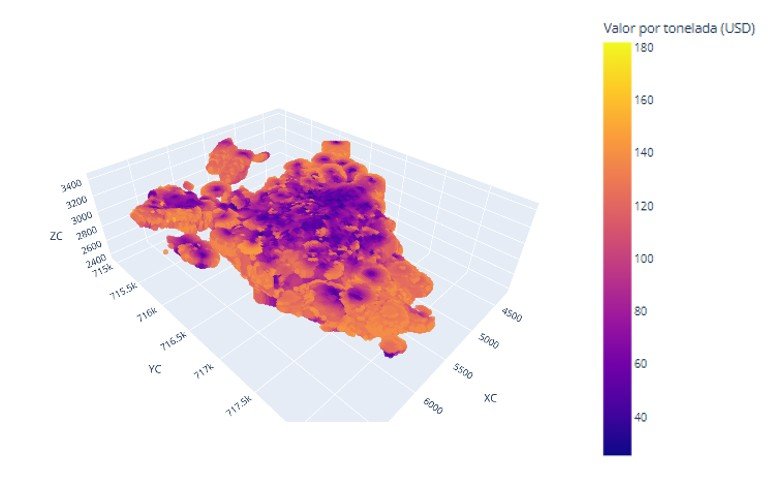
Este desarrollo consiste en la generación de modelos tridimensionales predictivos que integran leyes de mineral, tonelaje, costos operativos y parámetros económicos, con el fin de estimar el valor económico por tonelada en cada bloque del yacimiento. A través de visualizaciones 3D de alta resolución, permite identificar con precisión las zonas de mayor valor económico, lo que facilita una priorización estratégica en la secuencia de minado. Esta herramienta contribuye directamente a la optimización de la planificación minera, incrementando el Valor Presente Neto (NPV) desde las etapas iniciales de explotación, en consonancia con los objetivos de rentabilidad y eficiencia operativa
Optimal 3D Final Pit (Value per Ton)
This development determines the final pit that maximizes the economic value of the deposit through the application of optimization algorithms such as Lerchs-Grossmann or Pseudoflow. The process rigorously incorporates geotechnical, geometric, and operational constraints — such as mining sequence, access roads, and ramps — evaluating technical and economic feasibility as well as the sustainability of the design. Defining the optimal final pit is a critical component of long-term mine planning, enabling safe, efficient extraction aligned with Net Present Value (NPV) maximization objectives.
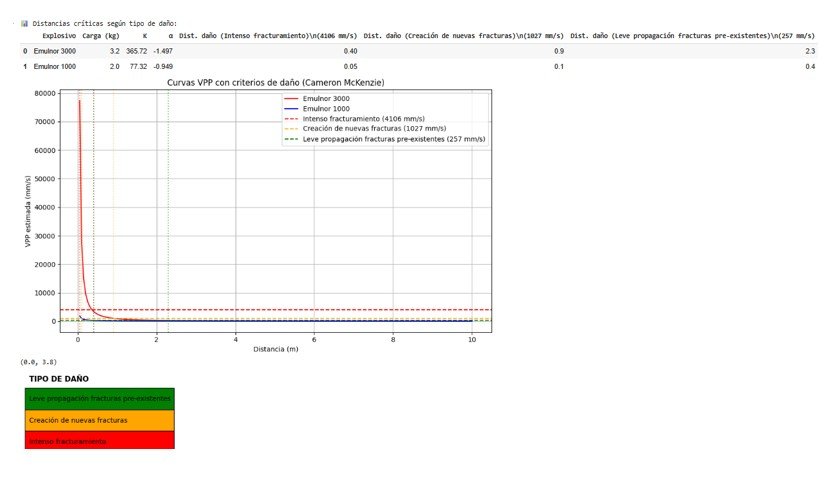
Rock Mass Damage Prediction
Using calibrated records and geomechanical criteria — such as those proposed by Cameron McKenzie — attenuation curves are generated to accurately estimate Peak Particle Velocity (PPV) for different explosive types. This information is key to predicting how damage propagates through the rock mass, depending on distance from the blast and the type of charge used. This analysis serves as the basis for modeling the real behavior of the rock mass, helping define safe charge limits, blast-hole spacing, and the level of intervention required at each face. It is the starting point for an intelligent predictive model capable of interpreting how rock vibrates and how far it fractures — turning data into technical decisions that optimize every blast from the outset.
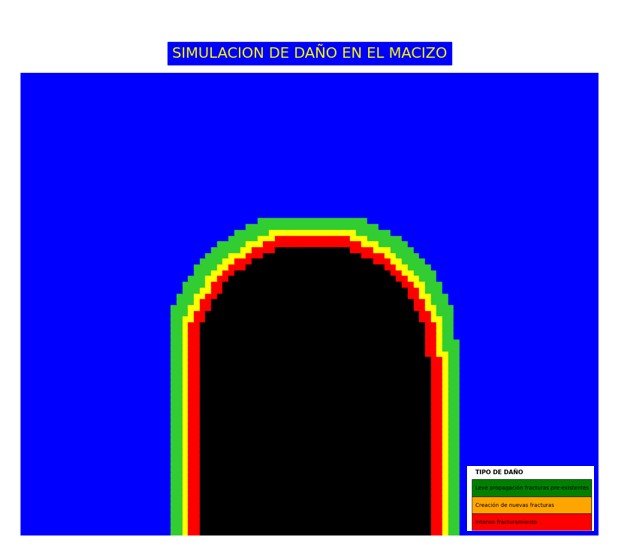
Structural Damage Simulation Around the Excavation Perimeter
We generate precise simulations of rock mass damage induced by each blast design, applying geomechanical criteria and machine learning algorithms trained on real data. This tool visualizes how damage is distributed around the tunnel, distinguishing zones of intense fracturing, new fracture generation, and propagation of pre-existing fissures. This analysis helps anticipate unwanted overbreak, adjust blast patterns, and reinforce ground support only where it is genuinely needed. It is a solution designed to support informed technical decisions, aligning operational efficiency with geomechanical stability.
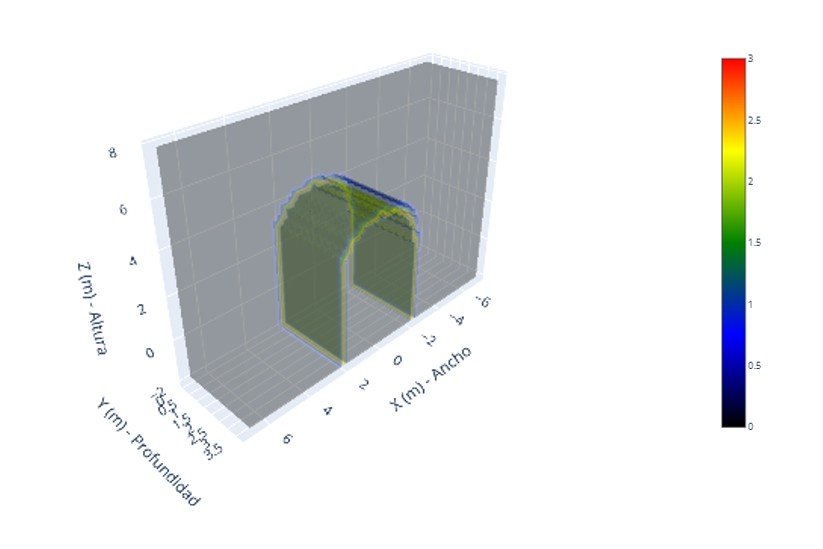
3D Predictive Modeling of Rock Mass Damage Using Artificial Intelligence
We develop three-dimensional models that simulate the real behavior of the rock mass after blasting, integrating geometry, explosive type, the attenuation curve, critical PPV, and structural damage criteria. Through the use of machine learning, these models learn from every blast executed and dynamically adjust to actual deposit conditions. 3D visualization identifies affected zones before excavation, optimizing ground support design, improving operational safety, and reducing costs associated with over-engineering or unforeseen structural failures.